Buy inspiracija.eu ?
We are moving the project
inspiracija.eu .
Are you interested in purchasing the domain
inspiracija.eu ?
domain@kv-gmbh.de · 0541-91531010
Buy inspiracija.eu ?
What distinguishes bipolar disorder from borderline personality disorder?
Bipolar disorder is a mood disorder characterized by extreme mood swings between mania and depression, while borderline personality disorder is a personality disorder characterized by unstable relationships, self-image, and emotions. Bipolar disorder is primarily a mood disorder, while borderline personality disorder is a personality disorder that affects a person's overall sense of self and relationships. Additionally, bipolar disorder is typically episodic, with distinct periods of mania and depression, while borderline personality disorder is characterized by chronic patterns of instability. Treatment approaches for these disorders also differ, with bipolar disorder often treated with mood stabilizers and borderline personality disorder often treated with therapy focused on improving interpersonal relationships and emotional regulation. **
What differentiates bipolar disorder from borderline personality disorder?
Bipolar disorder is characterized by extreme mood swings between manic episodes (elevated mood, increased energy) and depressive episodes, while borderline personality disorder is characterized by unstable relationships, self-image, and emotions. Bipolar disorder is primarily a mood disorder, while borderline personality disorder is a personality disorder that affects a person's overall way of thinking, feeling, and behaving. Additionally, bipolar disorder is typically treated with mood stabilizers and other medications, while borderline personality disorder is often treated with therapy, such as dialectical behavior therapy. **
Similar search terms for Disorder
Top-Angebote
Products related to Disorder:
-
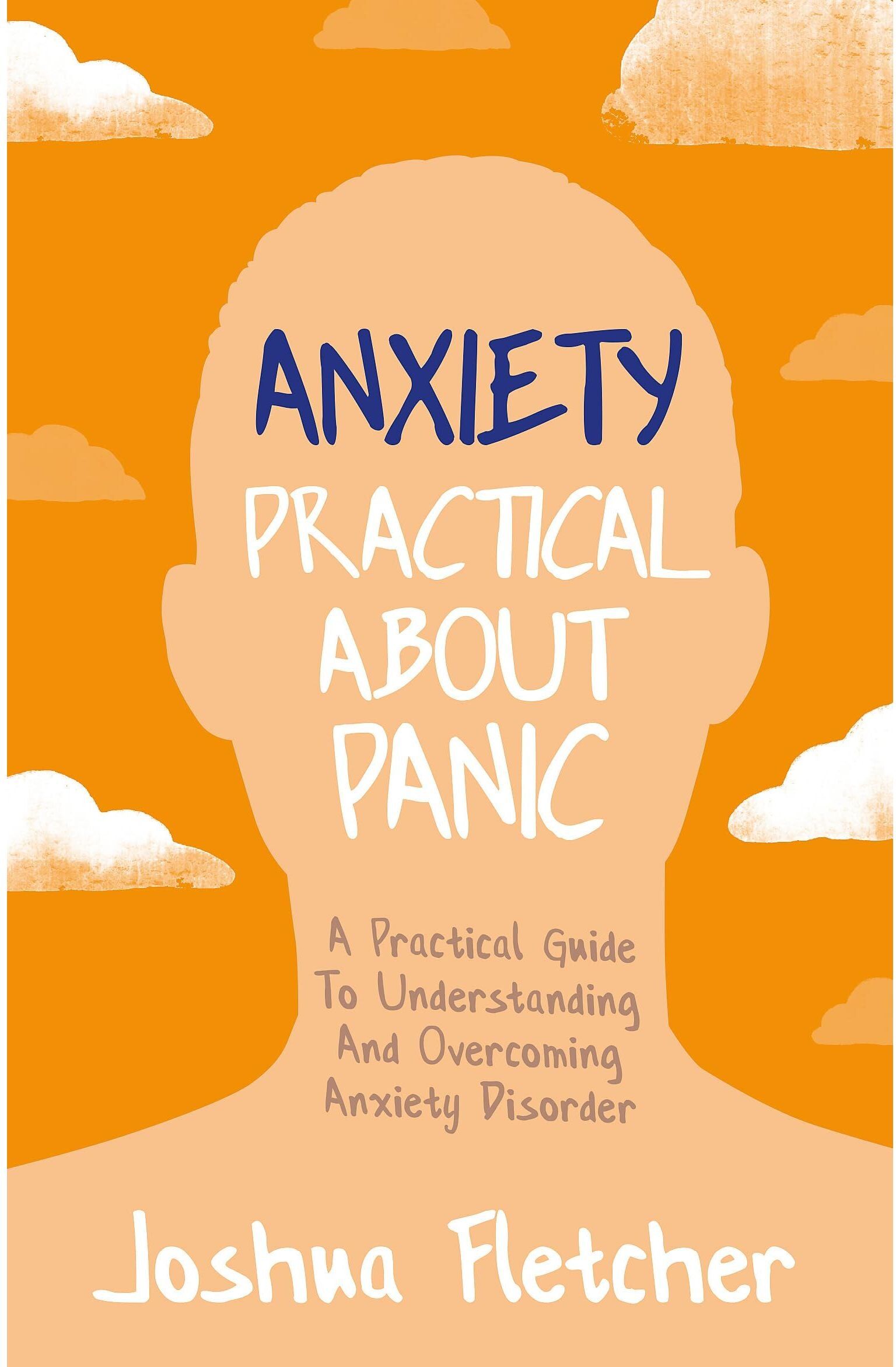
John Murray Anxiety: Practical About Panic: A Practical Guide to Understanding and Overcoming Anxiety DisorderDo you suffer from anxiety and panic? So did Joshua Fletcher, the author of the self-published bestseller ANXIETY: PANICKING ABOUT PANIC - but he treated his own condition successfully, went back to school, became a counsellor and emerged as one of the country's leading experts. ANXIETY: PRACTICAL ABOUT PANIC is a complete, easy to read and hugely practical book about anxiety from someone who knows how to recover and live your life to the full - and will show you how. Concentrating on the actions that you can take to alleviate and overcome your worries, this book is all about you and what you need to do to improve your life.8,99 £*Shipping: 2,99 £Secure redirect to the provider
-
New Harbinger Publications When Your Teen Has an Eating Disorder by Lauren Muhlheim & Laura Collins – Practical Recovery Guide & Mental Health Support CollectionIf your teen has an eating disorder-such as anorexia, bulimia, or binge eating-you may feel helpless, worried, or uncertain about how you can best support them. That's why you need real, proven-effective strategies you can use right away. Whether used in conjunction with treatment or on its own, this book offers an evidence-based approach you can use now to help your teen make healthy choices and stay well in body and mind.When Your Teen Has an Eating Disorder will empower you to help your teen using a unique, family-based treatment (FBT) approach. With this guide, you'll learn to respectfully and lovingly oversee your teen's nutritional rehabilitation, which includes helping to normalize eating behaviors, managing meals, expanding food flexibility, teaching independent and intuitive eating habits, and using coping strategies and recovery skills to prevent relapse.In addition to helping parents and caregivers, this book is a wonderful resource for mental health professionals, teachers, counselors, and coaches who work with parents of and teens with eating disorders. It clearly outlines the principles of FBT and the process of involving parents collaboratively in treatment.As a parent, feeding your child is a fundamental act of love-it has been from the start! However, when a child is affected by an eating disorder, parents often lose confidence in performing this basic task. This compassionate guide will help you gain the confidence needed to nurture your teen and help them heal.9,95 £*Shipping: 2,99 £Secure redirect to the provider
-
FOREO Imagination 100mlFOREO Imagination unique formula acts as the perfect base to your homemade face mask - so now you can make the most out of the fresh, natural ingredients from your kitchen. Formulated with Triple Infusion Complex, active nutrients are absorbed deep into the skin, feeding it from within. This antioxidant rich innovative product is enriched with Squalane and Vitamin E to help replenish fatty acids, and protect the skin from UV damage and damage caused by free radicals, leaving your skin looking and feeling healthier than ever before. Ingredients Aqua/Water/Eau, Glycerin, Cetearyl Alcohol, Caprylic/Capric Triglyceride, Cetyl Ethylhexanoate, Glyceryl Stearate, PEG-100 Stearate, Glycereth-26, Magnesium Aluminometasilicate, Dicaprylyl Carbonate, Hydroxyethyl Acrylate/Sodium Acryloyldimethyl Taurate Copolymer, Squalane, Potassium Cetyl Phosphate, Polysorbate 60, Trehalose, Hydroxyacetophenone, Pentaerythrityl Distearate, 1,2-Hexanediol, Xanthan Gum, Phospholipids, Allantoin, Panthenol, Bis-Ethoxydiglycol Cyclohexane 1,4-Dicarboxylate, Tocopheryl Acetate, Citrus Aurantium Dulcis Oil, Glycine Soja Oil, Sodium PCA, Disodium EDTA, Glycolipids, Dipotassium Glycyrrhizate, Glycine Soja Sterols, Propylene Glycol, Sodium Hyaluronate, Linoleic Acid, Glyceryl Linolenate41,99 £*Shipping: 0,00 £Secure redirect to the provider
-
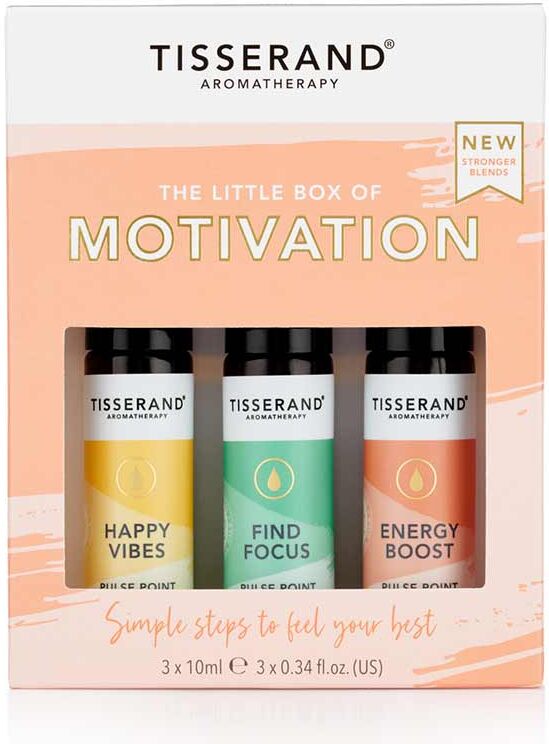
Tisserand The Little Box of Motivation 3x10mlRevitalise and revive your mind with Tisserand's Little Box of Motivation, including 3 pulse point roller balls. Contents • Happy Vibes Roller Ball 10ml • Find Focus Roller Ball 10ml • Energy Boost Roller Ball 10ml Formulated with 100% natural pure essential oils, these roller balls can be applied at the temples, neck and wrists or apply behind the ears. Wake up and be ready for the day ahead with these mood-enhancing roller balls. Tisserand Happy Vibes Pulse Point Roller Ball is designed to provide stamina during tiring moments. Formulated with euphoric bergamot oil, energising grapefruit oil and uplifting lime oil. Finding focus certainly isn't always easy. Provide your body and mind with an instant burst of focus with the Tisserand Find Focus Pulse Point Roller Ball. The perfect blend, enriched in Peppermint, soothing Lavender and uplifting Lemon, this is an aromatherapy roller ball with drive! Tisserand Energy High Pulse Point Roller Ball is designed to ease tension in the head, providing a cool release. Formulated with cooling white mint oil, restorative lavender oil and reviving lemon oil. Ingredients Happy Vibes Roller Ball: Caprylic/Capric Triglyceride, Amyris Balsamifera (Amyris) Bark Oil, Citrus Aurantium Bergamia (Bergamot) Peel Oil, Leptospermum Petersonii (Lemon Tea Tree) Oil, Citrus Aurantium Amara (Petitgrain) Leaf/Twig Oil, Mentha Citrata Herb Oil, Myristica Fragrans (Nutmeg) Kernel Oil, Linalool*, Limonene*, Geraniol*, Citral*, Farnesol*. Find Focus Roller Ball: Caprylic/Capric Triglyceride, Rosmarinus Officinalis (Rosemary) Leaf Oil, Citrus Paradisi (Grapefruit) Peel Oil, Cedrus Deodara (Cedarwood) Wood Oil, Coriandrum Sativum (Coriander) Seed Oil, Citrus Aurantium Amara (Petitgrain) Leaf/Twig Oil, Pelargonium Graveolens (Geranium) Oil, Jasminum Officinale (Jasmine) Flower Oil, Lavandula Angustifolia (Lavender) Oil, Tocopherol, Limonene*, Linalool*, Geraniol*, Citronellol*, Citral*, Benzyl Benzoate*, Benzyl Alcohol*, Eugenol*, Benzyl Salicylate*. Energy Boost Roller Ball: Caprylic/Capric Triglyceride, Citrus Aurantium Dulcis (Orange) Peel Oil, Citrus Aurantifolia (Lime) Peel Oil, Citrus Aurantium Bergamia (Bergamot) Peel Oil, Citrus Paradisi (Grapefruit) Peel Oil, Citrus Aurantium Amara (Petitgrain) Leaf/Twig Oil, Coriandrum Sativum (Coriander) Seed Oil, Cupressus Sempervirens (Cypress) Leaf Oil, Juniperus Communis (Juniper Berry) Fruit Oil, Limonene*, Linalool*, Citral*, Geraniol*. *Naturally occurring within essential oils10,59 £*Shipping: 2,95 £Secure redirect to the provider


-
Is it a brain disorder or an eye disorder?
It is an eye disorder. Amblyopia, also known as lazy eye, is a condition where one eye has reduced vision due to abnormal visual development in early childhood. It is not a brain disorder, but rather a problem with how the brain and eye work together to process visual information. Treatment for amblyopia typically involves correcting any underlying issues with the eye, such as using glasses or an eye patch to strengthen the weaker eye. **
-
When is a personality disorder considered a personality disorder?
A personality disorder is considered a personality disorder when it meets specific criteria outlined in the Diagnostic and Statistical Manual of Mental Disorders (DSM-5). These criteria include enduring patterns of behavior, cognition, and inner experience that deviate significantly from cultural expectations, are pervasive and inflexible, and lead to distress or impairment in social, occupational, or other areas of functioning. Additionally, the symptoms must be stable and of long duration, typically beginning in adolescence or early adulthood. A diagnosis of a personality disorder is made by a qualified mental health professional after a thorough assessment and evaluation of the individual's symptoms and history. **
-
What is an obsessive-compulsive disorder or other personality disorder?
Obsessive-compulsive disorder (OCD) is a mental health condition characterized by persistent, intrusive thoughts (obsessions) and repetitive behaviors or mental acts (compulsions) that a person feels driven to perform. These obsessions and compulsions can interfere with daily activities and cause significant distress. On the other hand, a personality disorder is a type of mental health condition characterized by unhealthy patterns of thinking, feeling, and behaving that can cause significant distress or impairment in functioning. There are different types of personality disorders, each with its own specific set of symptoms and behaviors. Both OCD and personality disorders can be effectively treated with therapy and, in some cases, medication. **
-
What is worse: histrionic personality disorder or schizoid personality disorder?
It is not accurate or fair to say that one personality disorder is worse than another as each disorder presents its own unique challenges and impacts individuals differently. Histrionic personality disorder is characterized by attention-seeking behavior and emotional instability, while schizoid personality disorder is characterized by social detachment and limited emotional expression. Both disorders can significantly impact an individual's relationships, functioning, and overall well-being, but the severity and impact of symptoms can vary greatly among individuals. It is important for individuals with either disorder to seek professional help and support to manage their symptoms and improve their quality of life. **


What is the difference between creativity and imagination?
Creativity is the ability to bring something new into existence, whether it be a product, idea, or solution. It involves the process of generating original and valuable ideas. Imagination, on the other hand, is the ability to form mental images, sensations, and concepts that are not present in one's immediate surroundings. It is the capacity to visualize and conceptualize things that may not exist in reality. In essence, creativity involves the application of imagination to produce something tangible and valuable. **
How can one develop visual imagination or creativity?
One can develop visual imagination or creativity by practicing observation and mindfulness. Taking the time to really see and appreciate the world around us can help to develop a deeper understanding of visual elements and how they can be used creatively. Engaging in activities such as drawing, painting, photography, or even just doodling can also help to exercise and expand visual imagination. Additionally, seeking inspiration from other artists and exposing oneself to a variety of visual stimuli can help to spark creativity and imagination. **
Top-Angebote
Products related to Disorder:
-
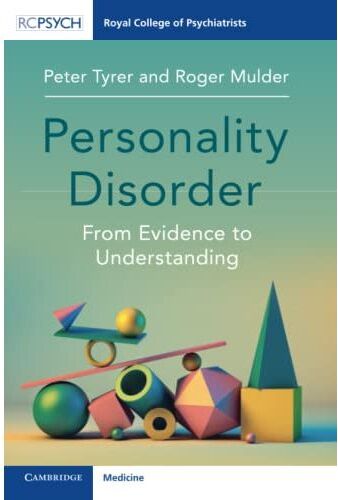
Cambridge University Press Personality Disorder: From Evidence to UnderstandingPersonality disorder affects more than 10% of the population but is widely ignored by health professionals as it is viewed as a term of stigma. The new classification of personality disorder in the ICD-11 shows that we are all on a spectrum of personality disturbance and that this can change over time. This important new book explains why all health professionals need to be aware of personality disorders in their clinical practice. Abnormal personality, at all levels of severity, should be taken into account when choosing treatment, when predicting outcomes, when anticipating relapse, and when explaining diagnosis. Authored by leading experts in this field, this book explains how the new classification of personality disorders in the ICD-11 helps to select treatment programmes, plan long-term management and avoid adverse consequences in the treatment of this patient group29,99 £*Shipping: 2,99 £Secure redirect to the provider
-
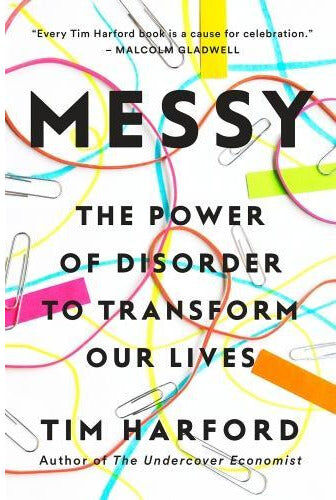
Riverhead Books Messy - The Power Of Disorder To Transform Our Lives by Tim HarfordMessy: The Power of Disorder to Transform Our Lives Description From the award-winning columnist and author of the national bestseller The Undercover Economist comes a provocative big idea book about the genuine benefits of being messy: at home; at work; in the classroom; and beyond. Look out for Tim's next book; Fifty Inventions That Shaped the Modern Economy. Messy: The Power of Disorder to Transform Our Lives celebrates the benefits that messiness has in our lives: why it's important; why we resist it; and why we should embrace it instead. Using research from neuroscience; psychology; social science; as well as captivating examples of real people doing extraordinary things; Tim Harford explains that the human qualities we value - creativity; responsiveness; resilience - are integral to the disorder; confusion; and disarray that produce them. From the music studio of Brian Eno to the Lincoln Memorial with Martin Luther King; Jr.; from the board room to the classroom; messiness lies at the core of how we innovate; how we achieve; how we reach each other - in short; how we succeed. In Messy; you'll learn about the unexpected connections between creativity and mess; understand why unexpected changes of plans; unfamiliar people; and unforeseen events can help generate new ideas and opportunities as they make you anxious and angry; and come to appreciate that the human inclination for tidiness - in our personal and professional lives; online; even in children's play - can mask deep and debilitating fragility that keep us from innovation. Stimulating and readable as it points exciting ways forward; Messy is an insightful exploration of the real advantages of mess in our lives.4,49 £*Shipping: 1,99 £Secure redirect to the provider
-
John Murray Anxiety: Practical About Panic: A Practical Guide to Understanding and Overcoming Anxiety DisorderDo you suffer from anxiety and panic? So did Joshua Fletcher, the author of the self-published bestseller ANXIETY: PANICKING ABOUT PANIC - but he treated his own condition successfully, went back to school, became a counsellor and emerged as one of the country's leading experts. ANXIETY: PRACTICAL ABOUT PANIC is a complete, easy to read and hugely practical book about anxiety from someone who knows how to recover and live your life to the full - and will show you how. Concentrating on the actions that you can take to alleviate and overcome your worries, this book is all about you and what you need to do to improve your life.8,99 £*Shipping: 2,99 £Secure redirect to the provider
-
New Harbinger Publications When Your Teen Has an Eating Disorder by Lauren Muhlheim & Laura Collins – Practical Recovery Guide & Mental Health Support CollectionIf your teen has an eating disorder-such as anorexia, bulimia, or binge eating-you may feel helpless, worried, or uncertain about how you can best support them. That's why you need real, proven-effective strategies you can use right away. Whether used in conjunction with treatment or on its own, this book offers an evidence-based approach you can use now to help your teen make healthy choices and stay well in body and mind.When Your Teen Has an Eating Disorder will empower you to help your teen using a unique, family-based treatment (FBT) approach. With this guide, you'll learn to respectfully and lovingly oversee your teen's nutritional rehabilitation, which includes helping to normalize eating behaviors, managing meals, expanding food flexibility, teaching independent and intuitive eating habits, and using coping strategies and recovery skills to prevent relapse.In addition to helping parents and caregivers, this book is a wonderful resource for mental health professionals, teachers, counselors, and coaches who work with parents of and teens with eating disorders. It clearly outlines the principles of FBT and the process of involving parents collaboratively in treatment.As a parent, feeding your child is a fundamental act of love-it has been from the start! However, when a child is affected by an eating disorder, parents often lose confidence in performing this basic task. This compassionate guide will help you gain the confidence needed to nurture your teen and help them heal.9,95 £*Shipping: 2,99 £Secure redirect to the provider
-
What distinguishes bipolar disorder from borderline personality disorder?
Bipolar disorder is a mood disorder characterized by extreme mood swings between mania and depression, while borderline personality disorder is a personality disorder characterized by unstable relationships, self-image, and emotions. Bipolar disorder is primarily a mood disorder, while borderline personality disorder is a personality disorder that affects a person's overall sense of self and relationships. Additionally, bipolar disorder is typically episodic, with distinct periods of mania and depression, while borderline personality disorder is characterized by chronic patterns of instability. Treatment approaches for these disorders also differ, with bipolar disorder often treated with mood stabilizers and borderline personality disorder often treated with therapy focused on improving interpersonal relationships and emotional regulation. **
-
What differentiates bipolar disorder from borderline personality disorder?
Bipolar disorder is characterized by extreme mood swings between manic episodes (elevated mood, increased energy) and depressive episodes, while borderline personality disorder is characterized by unstable relationships, self-image, and emotions. Bipolar disorder is primarily a mood disorder, while borderline personality disorder is a personality disorder that affects a person's overall way of thinking, feeling, and behaving. Additionally, bipolar disorder is typically treated with mood stabilizers and other medications, while borderline personality disorder is often treated with therapy, such as dialectical behavior therapy. **
-
Is it a brain disorder or an eye disorder?
It is an eye disorder. Amblyopia, also known as lazy eye, is a condition where one eye has reduced vision due to abnormal visual development in early childhood. It is not a brain disorder, but rather a problem with how the brain and eye work together to process visual information. Treatment for amblyopia typically involves correcting any underlying issues with the eye, such as using glasses or an eye patch to strengthen the weaker eye. **
-
When is a personality disorder considered a personality disorder?
A personality disorder is considered a personality disorder when it meets specific criteria outlined in the Diagnostic and Statistical Manual of Mental Disorders (DSM-5). These criteria include enduring patterns of behavior, cognition, and inner experience that deviate significantly from cultural expectations, are pervasive and inflexible, and lead to distress or impairment in social, occupational, or other areas of functioning. Additionally, the symptoms must be stable and of long duration, typically beginning in adolescence or early adulthood. A diagnosis of a personality disorder is made by a qualified mental health professional after a thorough assessment and evaluation of the individual's symptoms and history. **
Similar search terms for Disorder
-
FOREO Imagination 100mlFOREO Imagination unique formula acts as the perfect base to your homemade face mask - so now you can make the most out of the fresh, natural ingredients from your kitchen. Formulated with Triple Infusion Complex, active nutrients are absorbed deep into the skin, feeding it from within. This antioxidant rich innovative product is enriched with Squalane and Vitamin E to help replenish fatty acids, and protect the skin from UV damage and damage caused by free radicals, leaving your skin looking and feeling healthier than ever before. Ingredients Aqua/Water/Eau, Glycerin, Cetearyl Alcohol, Caprylic/Capric Triglyceride, Cetyl Ethylhexanoate, Glyceryl Stearate, PEG-100 Stearate, Glycereth-26, Magnesium Aluminometasilicate, Dicaprylyl Carbonate, Hydroxyethyl Acrylate/Sodium Acryloyldimethyl Taurate Copolymer, Squalane, Potassium Cetyl Phosphate, Polysorbate 60, Trehalose, Hydroxyacetophenone, Pentaerythrityl Distearate, 1,2-Hexanediol, Xanthan Gum, Phospholipids, Allantoin, Panthenol, Bis-Ethoxydiglycol Cyclohexane 1,4-Dicarboxylate, Tocopheryl Acetate, Citrus Aurantium Dulcis Oil, Glycine Soja Oil, Sodium PCA, Disodium EDTA, Glycolipids, Dipotassium Glycyrrhizate, Glycine Soja Sterols, Propylene Glycol, Sodium Hyaluronate, Linoleic Acid, Glyceryl Linolenate41,99 £*Shipping: 0,00 £Secure redirect to the provider
-
Tisserand The Little Box of Motivation 3x10mlRevitalise and revive your mind with Tisserand's Little Box of Motivation, including 3 pulse point roller balls. Contents • Happy Vibes Roller Ball 10ml • Find Focus Roller Ball 10ml • Energy Boost Roller Ball 10ml Formulated with 100% natural pure essential oils, these roller balls can be applied at the temples, neck and wrists or apply behind the ears. Wake up and be ready for the day ahead with these mood-enhancing roller balls. Tisserand Happy Vibes Pulse Point Roller Ball is designed to provide stamina during tiring moments. Formulated with euphoric bergamot oil, energising grapefruit oil and uplifting lime oil. Finding focus certainly isn't always easy. Provide your body and mind with an instant burst of focus with the Tisserand Find Focus Pulse Point Roller Ball. The perfect blend, enriched in Peppermint, soothing Lavender and uplifting Lemon, this is an aromatherapy roller ball with drive! Tisserand Energy High Pulse Point Roller Ball is designed to ease tension in the head, providing a cool release. Formulated with cooling white mint oil, restorative lavender oil and reviving lemon oil. Ingredients Happy Vibes Roller Ball: Caprylic/Capric Triglyceride, Amyris Balsamifera (Amyris) Bark Oil, Citrus Aurantium Bergamia (Bergamot) Peel Oil, Leptospermum Petersonii (Lemon Tea Tree) Oil, Citrus Aurantium Amara (Petitgrain) Leaf/Twig Oil, Mentha Citrata Herb Oil, Myristica Fragrans (Nutmeg) Kernel Oil, Linalool*, Limonene*, Geraniol*, Citral*, Farnesol*. Find Focus Roller Ball: Caprylic/Capric Triglyceride, Rosmarinus Officinalis (Rosemary) Leaf Oil, Citrus Paradisi (Grapefruit) Peel Oil, Cedrus Deodara (Cedarwood) Wood Oil, Coriandrum Sativum (Coriander) Seed Oil, Citrus Aurantium Amara (Petitgrain) Leaf/Twig Oil, Pelargonium Graveolens (Geranium) Oil, Jasminum Officinale (Jasmine) Flower Oil, Lavandula Angustifolia (Lavender) Oil, Tocopherol, Limonene*, Linalool*, Geraniol*, Citronellol*, Citral*, Benzyl Benzoate*, Benzyl Alcohol*, Eugenol*, Benzyl Salicylate*. Energy Boost Roller Ball: Caprylic/Capric Triglyceride, Citrus Aurantium Dulcis (Orange) Peel Oil, Citrus Aurantifolia (Lime) Peel Oil, Citrus Aurantium Bergamia (Bergamot) Peel Oil, Citrus Paradisi (Grapefruit) Peel Oil, Citrus Aurantium Amara (Petitgrain) Leaf/Twig Oil, Coriandrum Sativum (Coriander) Seed Oil, Cupressus Sempervirens (Cypress) Leaf Oil, Juniperus Communis (Juniper Berry) Fruit Oil, Limonene*, Linalool*, Citral*, Geraniol*. *Naturally occurring within essential oils10,59 £*Shipping: 2,95 £Secure redirect to the provider
-
bareMinerals Mineralist Gloss-Balm-ImaginationDrench lips with sheer colour and glossy shine. Enriched with sustainably sourced fruit oils, this vegan lip gloss-balm delivers instant nourishment in a cushiony, non-sticky formula. Lips feel softer, smoother and more hydrated over time - even after you take it off. The cap and vial are made with post-consumer recycled plastic. Get the best of gloss and balm in one: sheer colour, high-shine and irresistibly soft lips. 90% said their lips felt instantly hydrated* Delivers up to 50% smoother lips in just 1 week* Based on a 1-week clinical study with 30 people. Results may vary. Dermatologist-tested. Shades: • Ambition • Clarity • Enlightenment • Heart • Imagination • Ingenuity • Love • Peace • Serenity • Sincerity • Trust • Vision • Wonder • Zen Ingredients Ambition, Clarity, Enlightenment, Heart, Imagination, Ingenuity, Love, Peace, Serenity, Sincerity, Trust, Vision, Wonder, Zen: Diisostearyl Malate, Phenyl Dimethicone, Triisostearyl Citrate, Glyceryl Behenate, Helianthus Annuus (Sunflower) Seed Wax, Simmondsia Chinensis (Jojoba) Seed Oil, Punica Granatum Flower Extract, Hippophae Rhamnoides Oil, Prunus Domestica Seed Oil, Ascorbyl Palmitate, Tocopherol, Silica Dimethyl Silylate, Calcium Stearate, Polyglyceryl-2 Triisostearate, Flavor (Aroma), Linalool. May Contain/Peut Contenir (+/-): Mica, Titanium Dioxide (Ci 77891), Iron Oxides (Ci 77491, Ci 77492, Ci 77499), Blue 1 Lake (Ci 42090), Red 7 Lake (Ci 15850), Red 28 Lake (Ci 45410), Yellow 5 Lake (Ci 19140).15,60 £*Shipping: 2,95 £Secure redirect to the provider
-
What is an obsessive-compulsive disorder or other personality disorder?
Obsessive-compulsive disorder (OCD) is a mental health condition characterized by persistent, intrusive thoughts (obsessions) and repetitive behaviors or mental acts (compulsions) that a person feels driven to perform. These obsessions and compulsions can interfere with daily activities and cause significant distress. On the other hand, a personality disorder is a type of mental health condition characterized by unhealthy patterns of thinking, feeling, and behaving that can cause significant distress or impairment in functioning. There are different types of personality disorders, each with its own specific set of symptoms and behaviors. Both OCD and personality disorders can be effectively treated with therapy and, in some cases, medication. **
-
What is worse: histrionic personality disorder or schizoid personality disorder?
It is not accurate or fair to say that one personality disorder is worse than another as each disorder presents its own unique challenges and impacts individuals differently. Histrionic personality disorder is characterized by attention-seeking behavior and emotional instability, while schizoid personality disorder is characterized by social detachment and limited emotional expression. Both disorders can significantly impact an individual's relationships, functioning, and overall well-being, but the severity and impact of symptoms can vary greatly among individuals. It is important for individuals with either disorder to seek professional help and support to manage their symptoms and improve their quality of life. **
-
What is the difference between creativity and imagination?
Creativity is the ability to bring something new into existence, whether it be a product, idea, or solution. It involves the process of generating original and valuable ideas. Imagination, on the other hand, is the ability to form mental images, sensations, and concepts that are not present in one's immediate surroundings. It is the capacity to visualize and conceptualize things that may not exist in reality. In essence, creativity involves the application of imagination to produce something tangible and valuable. **
-
How can one develop visual imagination or creativity?
One can develop visual imagination or creativity by practicing observation and mindfulness. Taking the time to really see and appreciate the world around us can help to develop a deeper understanding of visual elements and how they can be used creatively. Engaging in activities such as drawing, painting, photography, or even just doodling can also help to exercise and expand visual imagination. Additionally, seeking inspiration from other artists and exposing oneself to a variety of visual stimuli can help to spark creativity and imagination. **
* All prices are inclusive of VAT and, if applicable, plus shipping costs. The offer information is based on the details provided by the respective shop and is updated through automated processes. Real-time updates do not occur, so deviations can occur in individual cases. ** Note: Parts of this content were created by AI.