Buy inspiracija.eu ?
We are moving the project
inspiracija.eu .
Are you interested in purchasing the domain
inspiracija.eu ?
domain@kv-gmbh.de · 0541-91531010
Buy inspiracija.eu ?
Are slugs useful?
Slugs can be both beneficial and harmful in the garden. On one hand, they help to break down organic matter and recycle nutrients in the soil. However, they can also be destructive pests, feeding on a wide variety of plants and causing damage to crops. Therefore, while slugs do have a role in the ecosystem, their impact on gardens and agriculture can be detrimental. **
Are slugs poisonous?
Slugs are not poisonous, but some species of slugs can produce toxins that are harmful to other animals if ingested. These toxins are usually used as a defense mechanism against predators. It is important to wash your hands after handling slugs, as their slime can potentially carry harmful bacteria. Overall, while slugs are not poisonous to humans, it is still best to avoid direct contact with them. **

Similar search terms for Slugs
Top-Angebote
Products related to Slugs:
-
bareMinerals Mineralist Gloss-Balm-ImaginationDrench lips with sheer colour and glossy shine. Enriched with sustainably sourced fruit oils, this vegan lip gloss-balm delivers instant nourishment in a cushiony, non-sticky formula. Lips feel softer, smoother and more hydrated over time - even after you take it off. The cap and vial are made with post-consumer recycled plastic. Get the best of gloss and balm in one: sheer colour, high-shine and irresistibly soft lips. 90% said their lips felt instantly hydrated* Delivers up to 50% smoother lips in just 1 week* Based on a 1-week clinical study with 30 people. Results may vary. Dermatologist-tested. Shades: • Ambition • Clarity • Enlightenment • Heart • Imagination • Ingenuity • Love • Peace • Serenity • Sincerity • Trust • Vision • Wonder • Zen Ingredients Ambition, Clarity, Enlightenment, Heart, Imagination, Ingenuity, Love, Peace, Serenity, Sincerity, Trust, Vision, Wonder, Zen: Diisostearyl Malate, Phenyl Dimethicone, Triisostearyl Citrate, Glyceryl Behenate, Helianthus Annuus (Sunflower) Seed Wax, Simmondsia Chinensis (Jojoba) Seed Oil, Punica Granatum Flower Extract, Hippophae Rhamnoides Oil, Prunus Domestica Seed Oil, Ascorbyl Palmitate, Tocopherol, Silica Dimethyl Silylate, Calcium Stearate, Polyglyceryl-2 Triisostearate, Flavor (Aroma), Linalool. May Contain/Peut Contenir (+/-): Mica, Titanium Dioxide (Ci 77891), Iron Oxides (Ci 77491, Ci 77492, Ci 77499), Blue 1 Lake (Ci 42090), Red 7 Lake (Ci 15850), Red 28 Lake (Ci 45410), Yellow 5 Lake (Ci 19140).15,60 £*Shipping: 2,95 £Secure redirect to the provider
-
Well Woven Ruby Imagination Squares Modern Geometric Area RugMade of air twist polypropylene. Super plush pile. Hand carved designs. Stain and fade resistant. Extremely durable and very easy to clean. 100% jute backing is safe for wood floors.232,74 $*Shipping: 0,00 $Secure redirect to the provider



-
Are slugs protected species?
Slugs are not considered protected species in most regions. They are often seen as pests due to their tendency to feed on plants and crops. In fact, many gardeners and farmers actively try to control slug populations to prevent damage to their vegetation. However, it is important to check local regulations and conservation laws to confirm the status of slugs in a specific area. **
-
Do slugs eat earthworms?
Slugs are known to be opportunistic feeders and will consume a variety of organic matter, including earthworms. However, slugs typically prefer softer plant material and decaying organic matter over earthworms. In cases where food sources are limited, slugs may resort to eating earthworms. Overall, while slugs may eat earthworms, it is not their primary food source. **
-
Will blackbirds eat slugs?
Yes, blackbirds will eat slugs. They are known to forage for a variety of insects and invertebrates, including slugs, as part of their diet. Blackbirds are opportunistic feeders and will consume a wide range of food items, including fruits, seeds, and small animals like slugs. Their diet can vary based on the availability of food in their environment. **
-
Do chickens eat slugs?
Yes, chickens do eat slugs. Chickens are omnivores and will eat a variety of insects and small creatures, including slugs. In fact, allowing chickens to forage in a garden or yard can help control the slug population naturally. However, it's important to monitor the chickens' diet and ensure they have a balanced feed to meet their nutritional needs. **


Can slugs enter the house?
Yes, slugs can enter the house through small openings such as cracks in the walls, gaps under doors, or through open windows. They are attracted to moist and dark environments, so they may seek shelter inside homes during periods of heavy rain or high humidity. To prevent slugs from entering the house, it's important to seal any potential entry points and keep the surrounding area free of excess moisture. **
Do slugs survive the summer?
Slugs are able to survive the summer by seeking out cool, damp areas to avoid the heat. They are most active during the night or early morning when temperatures are lower. Slugs also have the ability to aestivate, which is a period of dormancy similar to hibernation, to conserve energy during hot and dry conditions. Overall, slugs have adapted to survive the summer months by adjusting their behavior and seeking out suitable habitats. **
Top-Angebote
Products related to Slugs:
-
FOREO Imagination 100mlFOREO Imagination unique formula acts as the perfect base to your homemade face mask - so now you can make the most out of the fresh, natural ingredients from your kitchen. Formulated with Triple Infusion Complex, active nutrients are absorbed deep into the skin, feeding it from within. This antioxidant rich innovative product is enriched with Squalane and Vitamin E to help replenish fatty acids, and protect the skin from UV damage and damage caused by free radicals, leaving your skin looking and feeling healthier than ever before. Ingredients Aqua/Water/Eau, Glycerin, Cetearyl Alcohol, Caprylic/Capric Triglyceride, Cetyl Ethylhexanoate, Glyceryl Stearate, PEG-100 Stearate, Glycereth-26, Magnesium Aluminometasilicate, Dicaprylyl Carbonate, Hydroxyethyl Acrylate/Sodium Acryloyldimethyl Taurate Copolymer, Squalane, Potassium Cetyl Phosphate, Polysorbate 60, Trehalose, Hydroxyacetophenone, Pentaerythrityl Distearate, 1,2-Hexanediol, Xanthan Gum, Phospholipids, Allantoin, Panthenol, Bis-Ethoxydiglycol Cyclohexane 1,4-Dicarboxylate, Tocopheryl Acetate, Citrus Aurantium Dulcis Oil, Glycine Soja Oil, Sodium PCA, Disodium EDTA, Glycolipids, Dipotassium Glycyrrhizate, Glycine Soja Sterols, Propylene Glycol, Sodium Hyaluronate, Linoleic Acid, Glyceryl Linolenate41,99 £*Shipping: 0,00 £Secure redirect to the provider
-
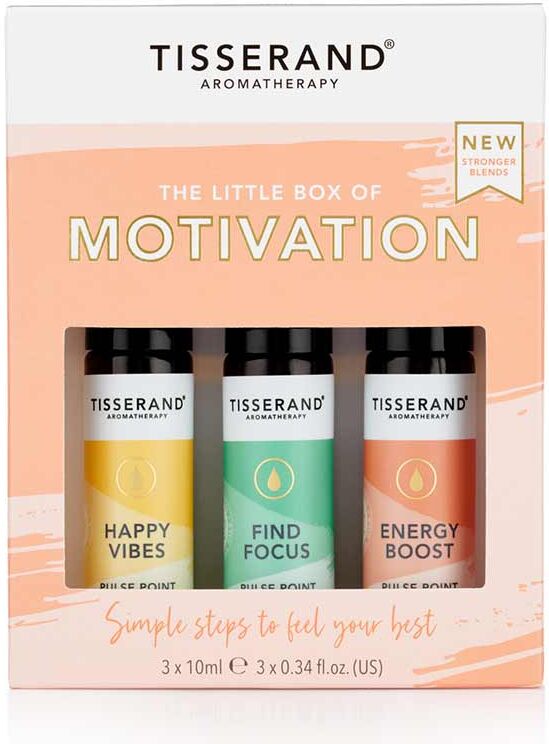
Tisserand The Little Box of Motivation 3x10mlRevitalise and revive your mind with Tisserand's Little Box of Motivation, including 3 pulse point roller balls. Contents • Happy Vibes Roller Ball 10ml • Find Focus Roller Ball 10ml • Energy Boost Roller Ball 10ml Formulated with 100% natural pure essential oils, these roller balls can be applied at the temples, neck and wrists or apply behind the ears. Wake up and be ready for the day ahead with these mood-enhancing roller balls. Tisserand Happy Vibes Pulse Point Roller Ball is designed to provide stamina during tiring moments. Formulated with euphoric bergamot oil, energising grapefruit oil and uplifting lime oil. Finding focus certainly isn't always easy. Provide your body and mind with an instant burst of focus with the Tisserand Find Focus Pulse Point Roller Ball. The perfect blend, enriched in Peppermint, soothing Lavender and uplifting Lemon, this is an aromatherapy roller ball with drive! Tisserand Energy High Pulse Point Roller Ball is designed to ease tension in the head, providing a cool release. Formulated with cooling white mint oil, restorative lavender oil and reviving lemon oil. Ingredients Happy Vibes Roller Ball: Caprylic/Capric Triglyceride, Amyris Balsamifera (Amyris) Bark Oil, Citrus Aurantium Bergamia (Bergamot) Peel Oil, Leptospermum Petersonii (Lemon Tea Tree) Oil, Citrus Aurantium Amara (Petitgrain) Leaf/Twig Oil, Mentha Citrata Herb Oil, Myristica Fragrans (Nutmeg) Kernel Oil, Linalool*, Limonene*, Geraniol*, Citral*, Farnesol*. Find Focus Roller Ball: Caprylic/Capric Triglyceride, Rosmarinus Officinalis (Rosemary) Leaf Oil, Citrus Paradisi (Grapefruit) Peel Oil, Cedrus Deodara (Cedarwood) Wood Oil, Coriandrum Sativum (Coriander) Seed Oil, Citrus Aurantium Amara (Petitgrain) Leaf/Twig Oil, Pelargonium Graveolens (Geranium) Oil, Jasminum Officinale (Jasmine) Flower Oil, Lavandula Angustifolia (Lavender) Oil, Tocopherol, Limonene*, Linalool*, Geraniol*, Citronellol*, Citral*, Benzyl Benzoate*, Benzyl Alcohol*, Eugenol*, Benzyl Salicylate*. Energy Boost Roller Ball: Caprylic/Capric Triglyceride, Citrus Aurantium Dulcis (Orange) Peel Oil, Citrus Aurantifolia (Lime) Peel Oil, Citrus Aurantium Bergamia (Bergamot) Peel Oil, Citrus Paradisi (Grapefruit) Peel Oil, Citrus Aurantium Amara (Petitgrain) Leaf/Twig Oil, Coriandrum Sativum (Coriander) Seed Oil, Cupressus Sempervirens (Cypress) Leaf Oil, Juniperus Communis (Juniper Berry) Fruit Oil, Limonene*, Linalool*, Citral*, Geraniol*. *Naturally occurring within essential oils10,59 £*Shipping: 2,95 £Secure redirect to the provider
-
bareMinerals Mineralist Gloss-Balm-ImaginationDrench lips with sheer colour and glossy shine. Enriched with sustainably sourced fruit oils, this vegan lip gloss-balm delivers instant nourishment in a cushiony, non-sticky formula. Lips feel softer, smoother and more hydrated over time - even after you take it off. The cap and vial are made with post-consumer recycled plastic. Get the best of gloss and balm in one: sheer colour, high-shine and irresistibly soft lips. 90% said their lips felt instantly hydrated* Delivers up to 50% smoother lips in just 1 week* Based on a 1-week clinical study with 30 people. Results may vary. Dermatologist-tested. Shades: • Ambition • Clarity • Enlightenment • Heart • Imagination • Ingenuity • Love • Peace • Serenity • Sincerity • Trust • Vision • Wonder • Zen Ingredients Ambition, Clarity, Enlightenment, Heart, Imagination, Ingenuity, Love, Peace, Serenity, Sincerity, Trust, Vision, Wonder, Zen: Diisostearyl Malate, Phenyl Dimethicone, Triisostearyl Citrate, Glyceryl Behenate, Helianthus Annuus (Sunflower) Seed Wax, Simmondsia Chinensis (Jojoba) Seed Oil, Punica Granatum Flower Extract, Hippophae Rhamnoides Oil, Prunus Domestica Seed Oil, Ascorbyl Palmitate, Tocopherol, Silica Dimethyl Silylate, Calcium Stearate, Polyglyceryl-2 Triisostearate, Flavor (Aroma), Linalool. May Contain/Peut Contenir (+/-): Mica, Titanium Dioxide (Ci 77891), Iron Oxides (Ci 77491, Ci 77492, Ci 77499), Blue 1 Lake (Ci 42090), Red 7 Lake (Ci 15850), Red 28 Lake (Ci 45410), Yellow 5 Lake (Ci 19140).15,60 £*Shipping: 2,95 £Secure redirect to the provider
-
Are slugs useful?
Slugs can be both beneficial and harmful in the garden. On one hand, they help to break down organic matter and recycle nutrients in the soil. However, they can also be destructive pests, feeding on a wide variety of plants and causing damage to crops. Therefore, while slugs do have a role in the ecosystem, their impact on gardens and agriculture can be detrimental. **
-
Are slugs poisonous?
Slugs are not poisonous, but some species of slugs can produce toxins that are harmful to other animals if ingested. These toxins are usually used as a defense mechanism against predators. It is important to wash your hands after handling slugs, as their slime can potentially carry harmful bacteria. Overall, while slugs are not poisonous to humans, it is still best to avoid direct contact with them. **
-
Are slugs protected species?
Slugs are not considered protected species in most regions. They are often seen as pests due to their tendency to feed on plants and crops. In fact, many gardeners and farmers actively try to control slug populations to prevent damage to their vegetation. However, it is important to check local regulations and conservation laws to confirm the status of slugs in a specific area. **
-
Do slugs eat earthworms?
Slugs are known to be opportunistic feeders and will consume a variety of organic matter, including earthworms. However, slugs typically prefer softer plant material and decaying organic matter over earthworms. In cases where food sources are limited, slugs may resort to eating earthworms. Overall, while slugs may eat earthworms, it is not their primary food source. **
Similar search terms for Slugs
-
Well Woven Ruby Imagination Squares Modern Geometric Area RugMade of air twist polypropylene. Super plush pile. Hand carved designs. Stain and fade resistant. Extremely durable and very easy to clean. 100% jute backing is safe for wood floors.232,74 $*Shipping: 0,00 $Secure redirect to the provider
-
Will blackbirds eat slugs?
Yes, blackbirds will eat slugs. They are known to forage for a variety of insects and invertebrates, including slugs, as part of their diet. Blackbirds are opportunistic feeders and will consume a wide range of food items, including fruits, seeds, and small animals like slugs. Their diet can vary based on the availability of food in their environment. **
-
Do chickens eat slugs?
Yes, chickens do eat slugs. Chickens are omnivores and will eat a variety of insects and small creatures, including slugs. In fact, allowing chickens to forage in a garden or yard can help control the slug population naturally. However, it's important to monitor the chickens' diet and ensure they have a balanced feed to meet their nutritional needs. **
-
Can slugs enter the house?
Yes, slugs can enter the house through small openings such as cracks in the walls, gaps under doors, or through open windows. They are attracted to moist and dark environments, so they may seek shelter inside homes during periods of heavy rain or high humidity. To prevent slugs from entering the house, it's important to seal any potential entry points and keep the surrounding area free of excess moisture. **
-
Do slugs survive the summer?
Slugs are able to survive the summer by seeking out cool, damp areas to avoid the heat. They are most active during the night or early morning when temperatures are lower. Slugs also have the ability to aestivate, which is a period of dormancy similar to hibernation, to conserve energy during hot and dry conditions. Overall, slugs have adapted to survive the summer months by adjusting their behavior and seeking out suitable habitats. **
* All prices are inclusive of VAT and, if applicable, plus shipping costs. The offer information is based on the details provided by the respective shop and is updated through automated processes. Real-time updates do not occur, so deviations can occur in individual cases. ** Note: Parts of this content were created by AI.