Buy inspiracija.eu ?
We are moving the project
inspiracija.eu .
Are you interested in purchasing the domain
inspiracija.eu ?
domain@kv-gmbh.de · 0541-91531010
Buy inspiracija.eu ?
Are soil substrates combinable?
Yes, soil substrates are combinable. Different types of soil substrates can be mixed together to create a custom blend that meets the specific needs of plants. For example, combining peat moss with perlite and vermiculite can create a well-draining and nutrient-rich substrate for growing plants. It's important to consider the specific requirements of the plants being grown and adjust the substrate mix accordingly. **
What are inorganic substrates in biology?
Inorganic substrates in biology are non-living materials that serve as a source of nutrients or energy for living organisms. These substrates can include minerals, metals, and other non-organic compounds that are essential for various biological processes. Inorganic substrates are used by organisms for processes such as photosynthesis, respiration, and metabolism. They play a crucial role in the functioning of living organisms and are essential for their survival and growth. **

Similar search terms for Substrates
Top-Angebote
Products related to Substrates:
-
bareMinerals Mineralist Gloss-Balm-ImaginationDrench lips with sheer colour and glossy shine. Enriched with sustainably sourced fruit oils, this vegan lip gloss-balm delivers instant nourishment in a cushiony, non-sticky formula. Lips feel softer, smoother and more hydrated over time - even after you take it off. The cap and vial are made with post-consumer recycled plastic. Get the best of gloss and balm in one: sheer colour, high-shine and irresistibly soft lips. 90% said their lips felt instantly hydrated* Delivers up to 50% smoother lips in just 1 week* Based on a 1-week clinical study with 30 people. Results may vary. Dermatologist-tested. Shades: • Ambition • Clarity • Enlightenment • Heart • Imagination • Ingenuity • Love • Peace • Serenity • Sincerity • Trust • Vision • Wonder • Zen Ingredients Ambition, Clarity, Enlightenment, Heart, Imagination, Ingenuity, Love, Peace, Serenity, Sincerity, Trust, Vision, Wonder, Zen: Diisostearyl Malate, Phenyl Dimethicone, Triisostearyl Citrate, Glyceryl Behenate, Helianthus Annuus (Sunflower) Seed Wax, Simmondsia Chinensis (Jojoba) Seed Oil, Punica Granatum Flower Extract, Hippophae Rhamnoides Oil, Prunus Domestica Seed Oil, Ascorbyl Palmitate, Tocopherol, Silica Dimethyl Silylate, Calcium Stearate, Polyglyceryl-2 Triisostearate, Flavor (Aroma), Linalool. May Contain/Peut Contenir (+/-): Mica, Titanium Dioxide (Ci 77891), Iron Oxides (Ci 77491, Ci 77492, Ci 77499), Blue 1 Lake (Ci 42090), Red 7 Lake (Ci 15850), Red 28 Lake (Ci 45410), Yellow 5 Lake (Ci 19140).15,60 £*Shipping: 2,95 £Secure redirect to the provider
-
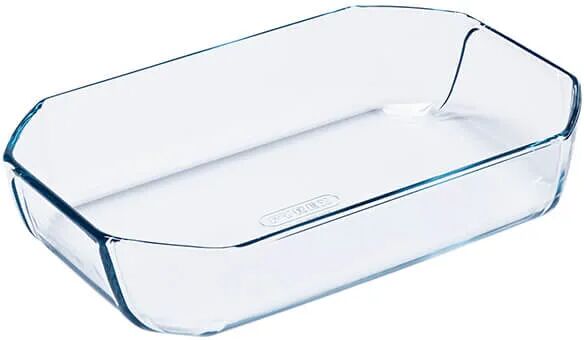
Pyrex Inspiration 35 x 22cm Rectangular RoasterThe Pyrex Inspiration Rectangular Roaster is made from high borosilicate glass that is thermal shock resistant up to 220°C. The geometric shape of the eye catching design features integrated handles ideal for serving oven baked meals and has a 10 year guarantee. This glass Roaster can store food in the fridge and freezer for easy food preparation. The Pyrex Inspiration Rectangular Roaster is 35 x 22cm.16,19 £*Shipping: 3,50 £Secure redirect to the provider


-
What is the specificity of enzymes on substrates?
Enzymes are highly specific in their interactions with substrates, meaning that each enzyme typically catalyzes a specific chemical reaction with a specific substrate. This specificity is due to the unique three-dimensional shape of the enzyme's active site, which is complementary to the shape and chemical properties of its specific substrate. The enzyme-substrate interaction is often compared to a lock and key, where the enzyme (lock) can only bind to its specific substrate (key) due to their precise matching shapes and chemical properties. This specificity ensures that enzymes can efficiently catalyze specific reactions without interfering with other cellular processes. **
-
Which color pigments are not allowed on alkaline substrates?
Pigments that are not allowed on alkaline substrates are acidic pigments. These pigments can react with the alkaline surface, causing color changes or other undesirable effects. Some examples of acidic pigments that should be avoided on alkaline substrates include certain reds, yellows, and oranges. It is important to choose pigments that are compatible with the pH of the substrate to ensure the longevity and quality of the artwork. **
-
What are the substrates and the specificity of action of glucose oxidase?
Glucose oxidase is an enzyme that specifically acts on glucose as its substrate. It catalyzes the oxidation of glucose to produce gluconic acid and hydrogen peroxide. This enzyme is highly specific to glucose and does not act on other sugars or compounds. Glucose oxidase is commonly used in various industries, such as food and beverage, for its ability to detect and quantify glucose levels. **
-
What are the printing substrates and printing materials used in the following printing processes?
In offset printing, the printing substrate is typically paper or cardboard, while the printing materials are ink and a printing plate. In digital printing, the substrate can vary and include paper, plastic, fabric, or even metal, and the printing materials are toner or liquid ink. In flexography, the substrate is usually flexible and can include paper, plastic, or cellophane, and the printing materials are liquid inks. In gravure printing, the substrate can be paper, plastic, or metal, and the printing materials are liquid inks. **


What is the difference between creativity and imagination?
Creativity is the ability to bring something new into existence, whether it be a product, idea, or solution. It involves the process of generating original and valuable ideas. Imagination, on the other hand, is the ability to form mental images, sensations, and concepts that are not present in one's immediate surroundings. It is the capacity to visualize and conceptualize things that may not exist in reality. In essence, creativity involves the application of imagination to produce something tangible and valuable. **
How can one develop visual imagination or creativity?
One can develop visual imagination or creativity by practicing observation and mindfulness. Taking the time to really see and appreciate the world around us can help to develop a deeper understanding of visual elements and how they can be used creatively. Engaging in activities such as drawing, painting, photography, or even just doodling can also help to exercise and expand visual imagination. Additionally, seeking inspiration from other artists and exposing oneself to a variety of visual stimuli can help to spark creativity and imagination. **
Top-Angebote
Products related to Substrates:
-
FOREO Imagination 100mlFOREO Imagination unique formula acts as the perfect base to your homemade face mask - so now you can make the most out of the fresh, natural ingredients from your kitchen. Formulated with Triple Infusion Complex, active nutrients are absorbed deep into the skin, feeding it from within. This antioxidant rich innovative product is enriched with Squalane and Vitamin E to help replenish fatty acids, and protect the skin from UV damage and damage caused by free radicals, leaving your skin looking and feeling healthier than ever before. Ingredients Aqua/Water/Eau, Glycerin, Cetearyl Alcohol, Caprylic/Capric Triglyceride, Cetyl Ethylhexanoate, Glyceryl Stearate, PEG-100 Stearate, Glycereth-26, Magnesium Aluminometasilicate, Dicaprylyl Carbonate, Hydroxyethyl Acrylate/Sodium Acryloyldimethyl Taurate Copolymer, Squalane, Potassium Cetyl Phosphate, Polysorbate 60, Trehalose, Hydroxyacetophenone, Pentaerythrityl Distearate, 1,2-Hexanediol, Xanthan Gum, Phospholipids, Allantoin, Panthenol, Bis-Ethoxydiglycol Cyclohexane 1,4-Dicarboxylate, Tocopheryl Acetate, Citrus Aurantium Dulcis Oil, Glycine Soja Oil, Sodium PCA, Disodium EDTA, Glycolipids, Dipotassium Glycyrrhizate, Glycine Soja Sterols, Propylene Glycol, Sodium Hyaluronate, Linoleic Acid, Glyceryl Linolenate41,99 £*Shipping: 0,00 £Secure redirect to the provider
-
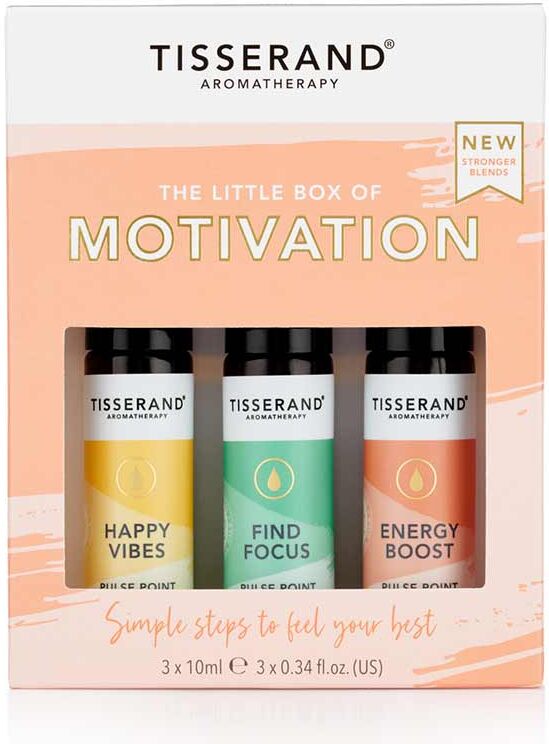
Tisserand The Little Box of Motivation 3x10mlRevitalise and revive your mind with Tisserand's Little Box of Motivation, including 3 pulse point roller balls. Contents • Happy Vibes Roller Ball 10ml • Find Focus Roller Ball 10ml • Energy Boost Roller Ball 10ml Formulated with 100% natural pure essential oils, these roller balls can be applied at the temples, neck and wrists or apply behind the ears. Wake up and be ready for the day ahead with these mood-enhancing roller balls. Tisserand Happy Vibes Pulse Point Roller Ball is designed to provide stamina during tiring moments. Formulated with euphoric bergamot oil, energising grapefruit oil and uplifting lime oil. Finding focus certainly isn't always easy. Provide your body and mind with an instant burst of focus with the Tisserand Find Focus Pulse Point Roller Ball. The perfect blend, enriched in Peppermint, soothing Lavender and uplifting Lemon, this is an aromatherapy roller ball with drive! Tisserand Energy High Pulse Point Roller Ball is designed to ease tension in the head, providing a cool release. Formulated with cooling white mint oil, restorative lavender oil and reviving lemon oil. Ingredients Happy Vibes Roller Ball: Caprylic/Capric Triglyceride, Amyris Balsamifera (Amyris) Bark Oil, Citrus Aurantium Bergamia (Bergamot) Peel Oil, Leptospermum Petersonii (Lemon Tea Tree) Oil, Citrus Aurantium Amara (Petitgrain) Leaf/Twig Oil, Mentha Citrata Herb Oil, Myristica Fragrans (Nutmeg) Kernel Oil, Linalool*, Limonene*, Geraniol*, Citral*, Farnesol*. Find Focus Roller Ball: Caprylic/Capric Triglyceride, Rosmarinus Officinalis (Rosemary) Leaf Oil, Citrus Paradisi (Grapefruit) Peel Oil, Cedrus Deodara (Cedarwood) Wood Oil, Coriandrum Sativum (Coriander) Seed Oil, Citrus Aurantium Amara (Petitgrain) Leaf/Twig Oil, Pelargonium Graveolens (Geranium) Oil, Jasminum Officinale (Jasmine) Flower Oil, Lavandula Angustifolia (Lavender) Oil, Tocopherol, Limonene*, Linalool*, Geraniol*, Citronellol*, Citral*, Benzyl Benzoate*, Benzyl Alcohol*, Eugenol*, Benzyl Salicylate*. Energy Boost Roller Ball: Caprylic/Capric Triglyceride, Citrus Aurantium Dulcis (Orange) Peel Oil, Citrus Aurantifolia (Lime) Peel Oil, Citrus Aurantium Bergamia (Bergamot) Peel Oil, Citrus Paradisi (Grapefruit) Peel Oil, Citrus Aurantium Amara (Petitgrain) Leaf/Twig Oil, Coriandrum Sativum (Coriander) Seed Oil, Cupressus Sempervirens (Cypress) Leaf Oil, Juniperus Communis (Juniper Berry) Fruit Oil, Limonene*, Linalool*, Citral*, Geraniol*. *Naturally occurring within essential oils10,59 £*Shipping: 2,95 £Secure redirect to the provider
-
bareMinerals Mineralist Gloss-Balm-ImaginationDrench lips with sheer colour and glossy shine. Enriched with sustainably sourced fruit oils, this vegan lip gloss-balm delivers instant nourishment in a cushiony, non-sticky formula. Lips feel softer, smoother and more hydrated over time - even after you take it off. The cap and vial are made with post-consumer recycled plastic. Get the best of gloss and balm in one: sheer colour, high-shine and irresistibly soft lips. 90% said their lips felt instantly hydrated* Delivers up to 50% smoother lips in just 1 week* Based on a 1-week clinical study with 30 people. Results may vary. Dermatologist-tested. Shades: • Ambition • Clarity • Enlightenment • Heart • Imagination • Ingenuity • Love • Peace • Serenity • Sincerity • Trust • Vision • Wonder • Zen Ingredients Ambition, Clarity, Enlightenment, Heart, Imagination, Ingenuity, Love, Peace, Serenity, Sincerity, Trust, Vision, Wonder, Zen: Diisostearyl Malate, Phenyl Dimethicone, Triisostearyl Citrate, Glyceryl Behenate, Helianthus Annuus (Sunflower) Seed Wax, Simmondsia Chinensis (Jojoba) Seed Oil, Punica Granatum Flower Extract, Hippophae Rhamnoides Oil, Prunus Domestica Seed Oil, Ascorbyl Palmitate, Tocopherol, Silica Dimethyl Silylate, Calcium Stearate, Polyglyceryl-2 Triisostearate, Flavor (Aroma), Linalool. May Contain/Peut Contenir (+/-): Mica, Titanium Dioxide (Ci 77891), Iron Oxides (Ci 77491, Ci 77492, Ci 77499), Blue 1 Lake (Ci 42090), Red 7 Lake (Ci 15850), Red 28 Lake (Ci 45410), Yellow 5 Lake (Ci 19140).15,60 £*Shipping: 2,95 £Secure redirect to the provider
-
Are soil substrates combinable?
Yes, soil substrates are combinable. Different types of soil substrates can be mixed together to create a custom blend that meets the specific needs of plants. For example, combining peat moss with perlite and vermiculite can create a well-draining and nutrient-rich substrate for growing plants. It's important to consider the specific requirements of the plants being grown and adjust the substrate mix accordingly. **
-
What are inorganic substrates in biology?
Inorganic substrates in biology are non-living materials that serve as a source of nutrients or energy for living organisms. These substrates can include minerals, metals, and other non-organic compounds that are essential for various biological processes. Inorganic substrates are used by organisms for processes such as photosynthesis, respiration, and metabolism. They play a crucial role in the functioning of living organisms and are essential for their survival and growth. **
-
What is the specificity of enzymes on substrates?
Enzymes are highly specific in their interactions with substrates, meaning that each enzyme typically catalyzes a specific chemical reaction with a specific substrate. This specificity is due to the unique three-dimensional shape of the enzyme's active site, which is complementary to the shape and chemical properties of its specific substrate. The enzyme-substrate interaction is often compared to a lock and key, where the enzyme (lock) can only bind to its specific substrate (key) due to their precise matching shapes and chemical properties. This specificity ensures that enzymes can efficiently catalyze specific reactions without interfering with other cellular processes. **
-
Which color pigments are not allowed on alkaline substrates?
Pigments that are not allowed on alkaline substrates are acidic pigments. These pigments can react with the alkaline surface, causing color changes or other undesirable effects. Some examples of acidic pigments that should be avoided on alkaline substrates include certain reds, yellows, and oranges. It is important to choose pigments that are compatible with the pH of the substrate to ensure the longevity and quality of the artwork. **
Similar search terms for Substrates
-
Pyrex Inspiration 35 x 22cm Rectangular RoasterThe Pyrex Inspiration Rectangular Roaster is made from high borosilicate glass that is thermal shock resistant up to 220°C. The geometric shape of the eye catching design features integrated handles ideal for serving oven baked meals and has a 10 year guarantee. This glass Roaster can store food in the fridge and freezer for easy food preparation. The Pyrex Inspiration Rectangular Roaster is 35 x 22cm.16,19 £*Shipping: 3,50 £Secure redirect to the provider
-
Bloomsbury Publishing Running Up That Hill by Vassos Alexander – Inspiring Running Memoir & Fitness Motivation GuideSHORTLISTED FOR THE TELEGRAPH SPORTS HEALTH & FITNESS BOOK OF THE YEAR AWARD 2019 RUNNING AWARDS 2019 - TOP BOOK Why else would he run an ultra in Paris, backwards, having missed the start? Why head to Wales for the world's hardest mountain race with a badly sprained ankle? And why follow in some unforgiving, ancient footsteps and attempt the oldest and toughest footrace on earth, the 153-mile Spartathlon? There's joy to be found here. Really there is. Vassos recalls his own assaults on these gruelling races, along with ultra-running legends including Scott Jurek, Jasmin Paris, Kilian Jornet, Mimi Anderson and Dean Karnazes. They all testify to the transformative power of endurance running. It's about the astonishing highs that come from pushing your body to the limit. The confidence and peace when you challenge yourself and succeed. All told, this is a cracking tale of what keeps ultra-distance runners running, mile after mile after mile.4,99 £*Shipping: 1,99 £Secure redirect to the provider
-
IT 4 Consultancy FZCO My Gratitude Journal: A happy mind and soul practice & promoted positivity and happinessEvery day, wonderful things happen! Noting them and recording them can help you to appreciate everything that is good in your life and feel grateful for it. That in turn makes you feel happy and positive. My gratitude Journal will help you to keep track of all the amazing, remarkable and truly gratifying things in your life.1,99 £*Shipping: 1,99 £Secure redirect to the provider
-
What are the substrates and the specificity of action of glucose oxidase?
Glucose oxidase is an enzyme that specifically acts on glucose as its substrate. It catalyzes the oxidation of glucose to produce gluconic acid and hydrogen peroxide. This enzyme is highly specific to glucose and does not act on other sugars or compounds. Glucose oxidase is commonly used in various industries, such as food and beverage, for its ability to detect and quantify glucose levels. **
-
What are the printing substrates and printing materials used in the following printing processes?
In offset printing, the printing substrate is typically paper or cardboard, while the printing materials are ink and a printing plate. In digital printing, the substrate can vary and include paper, plastic, fabric, or even metal, and the printing materials are toner or liquid ink. In flexography, the substrate is usually flexible and can include paper, plastic, or cellophane, and the printing materials are liquid inks. In gravure printing, the substrate can be paper, plastic, or metal, and the printing materials are liquid inks. **
-
What is the difference between creativity and imagination?
Creativity is the ability to bring something new into existence, whether it be a product, idea, or solution. It involves the process of generating original and valuable ideas. Imagination, on the other hand, is the ability to form mental images, sensations, and concepts that are not present in one's immediate surroundings. It is the capacity to visualize and conceptualize things that may not exist in reality. In essence, creativity involves the application of imagination to produce something tangible and valuable. **
-
How can one develop visual imagination or creativity?
One can develop visual imagination or creativity by practicing observation and mindfulness. Taking the time to really see and appreciate the world around us can help to develop a deeper understanding of visual elements and how they can be used creatively. Engaging in activities such as drawing, painting, photography, or even just doodling can also help to exercise and expand visual imagination. Additionally, seeking inspiration from other artists and exposing oneself to a variety of visual stimuli can help to spark creativity and imagination. **
* All prices are inclusive of VAT and, if applicable, plus shipping costs. The offer information is based on the details provided by the respective shop and is updated through automated processes. Real-time updates do not occur, so deviations can occur in individual cases. ** Note: Parts of this content were created by AI.